Bossam (보쌈)
Korea
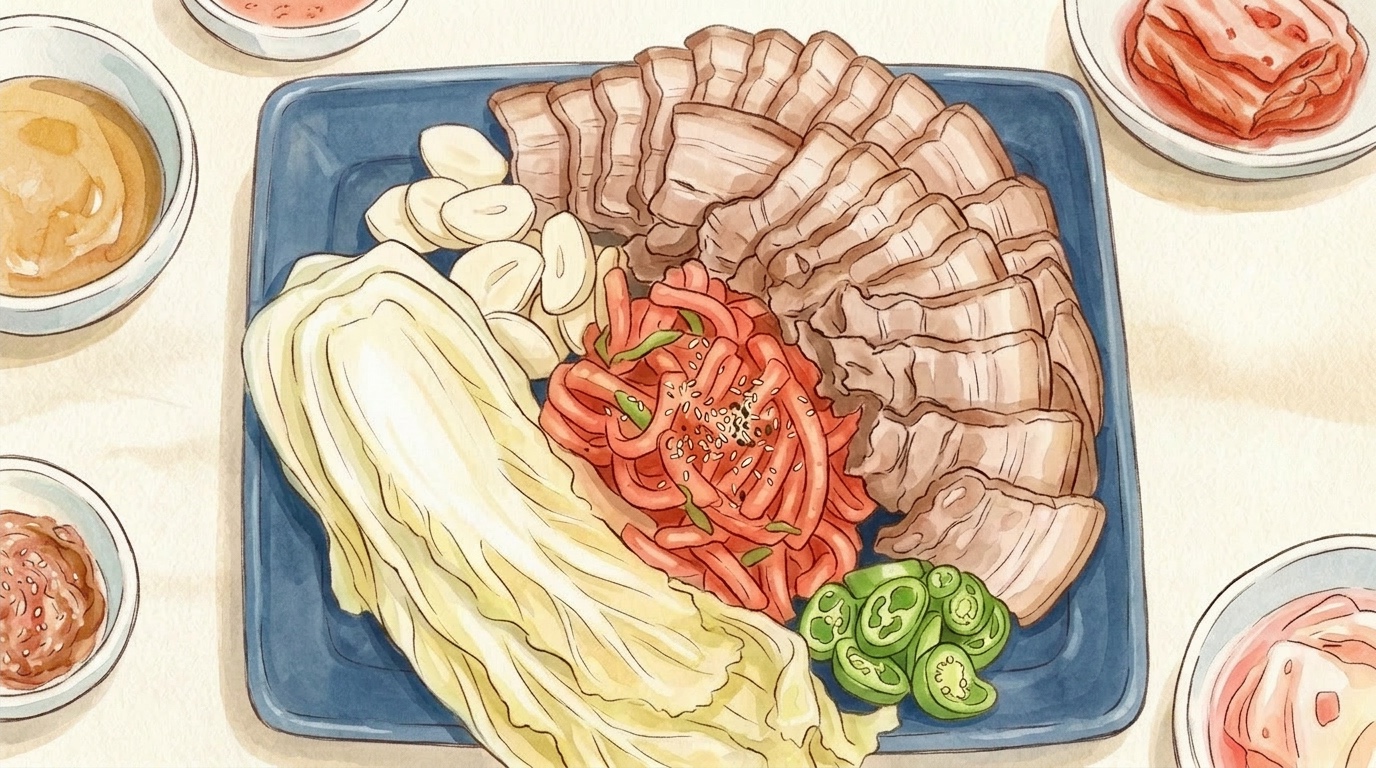
Juicy, tender and aromatic pork belly served in crispy fermented cabbage or lettuce leaves with a spicy radish salad and a seasoning made from salted shrimp. A traditional Korean dish, perfect for a family dinner.
Ingredients
- 2 pcs pork belly
- 0.5 pcs onion
- 2.5 pcs scallion
- 7.5 pcs garlic
- 1 pcs ginger
- 1 tsp black peppercorns
- 1.5 tbsp doenjang
- 1 tsp instant coffee
- 1 tsp salt
- 0.5 tsp coarse salt
- 2 pcs bay leaf
- 2000 ml water
- to taste fermented cabbage leaves
- to taste sae-ujeot
- to taste gochugaru
- to taste sesame oil
- to taste sesame seeds
- to taste radish
Steps
-
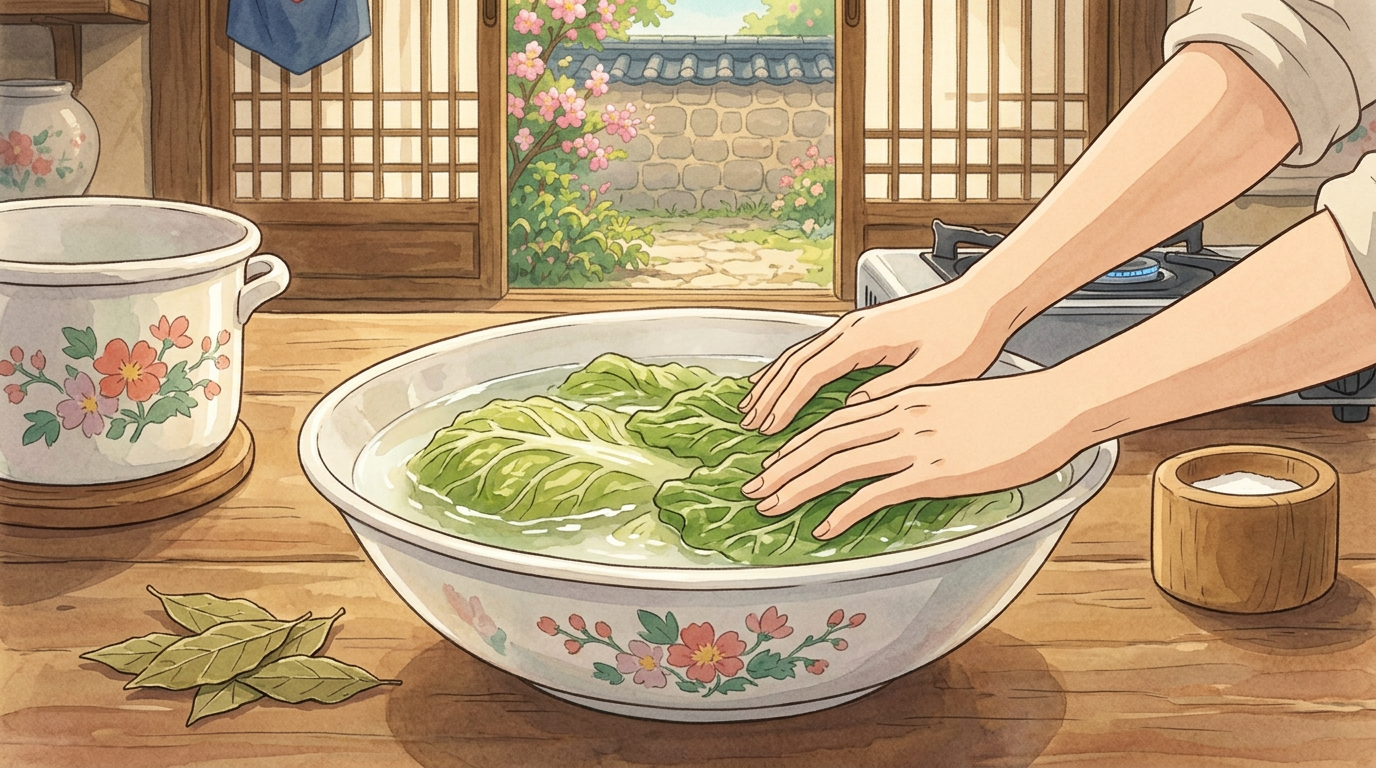
Dissolve ½ tsp coarse salt in 4 cups (≈960 ml) water, soak the fermented cabbage leaves (or lettuce) in the brine for 2‑4 h until softened, then rinse thoroughly and squeeze.
-
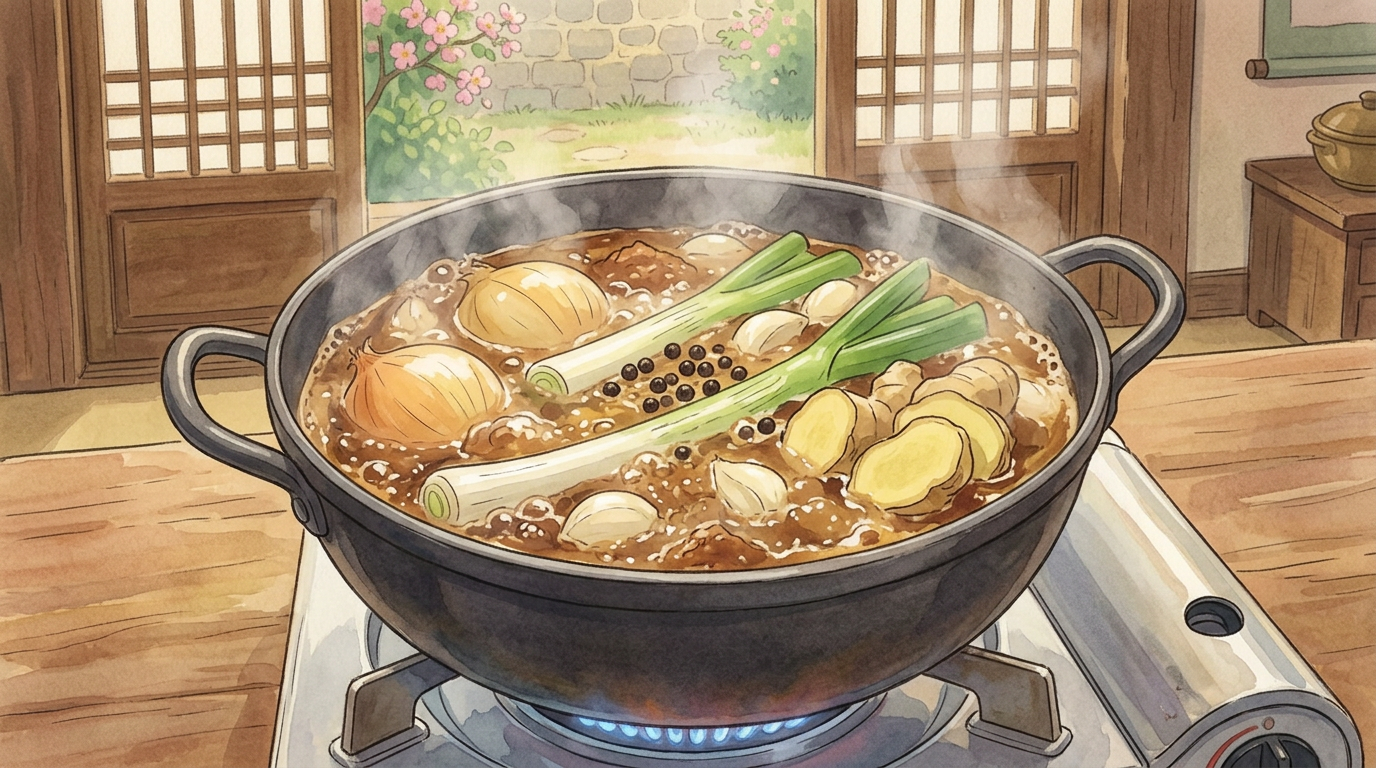
In a large pot combine water, onion, scallion, garlic, ginger, black peppercorns, doenjang, instant coffee, salt and bay leaf. Bring to a boil and simmer for 5 minutes.
-

Add the pork belly to the pot, bring to a boil again and cook uncovered for about 5 minutes.
-
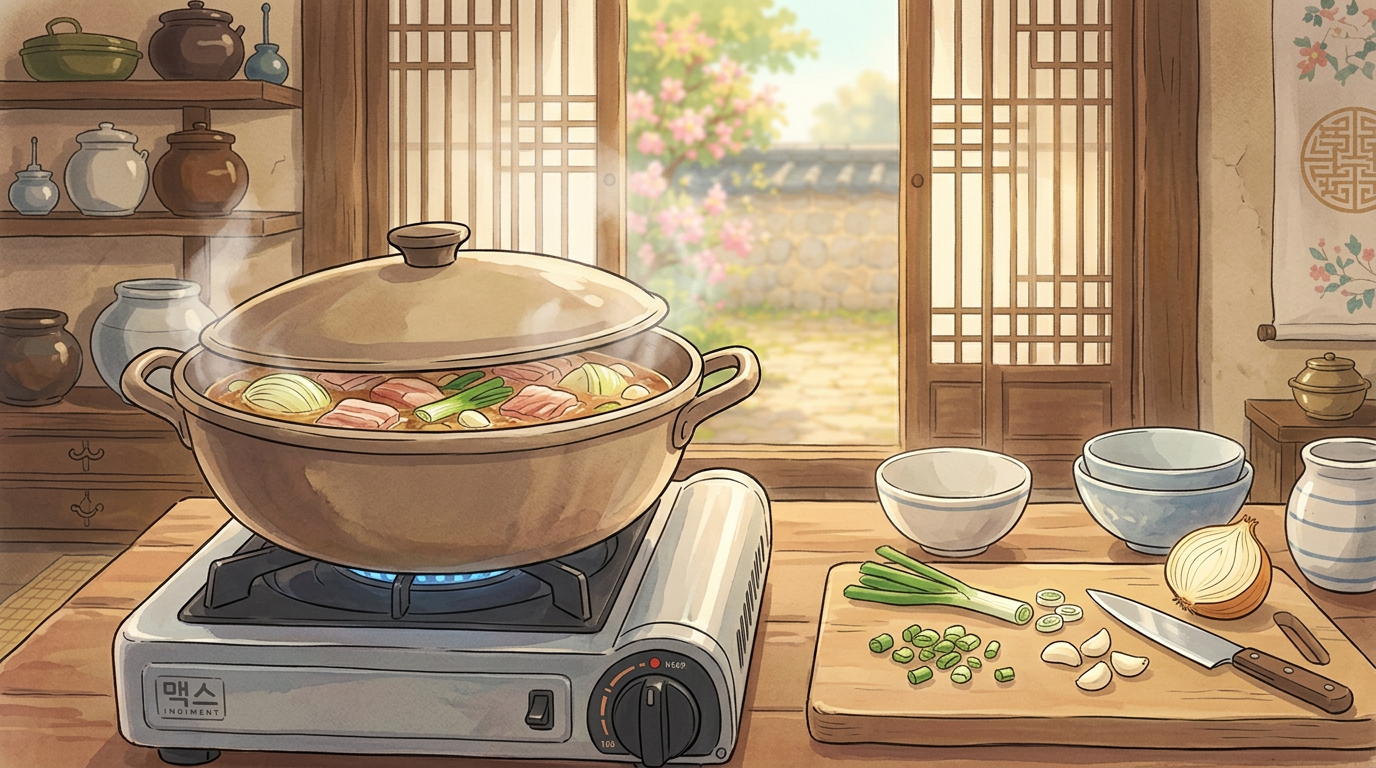
Reduce heat to medium, cover and simmer for 45‑50 minutes until the meat is very tender.
-
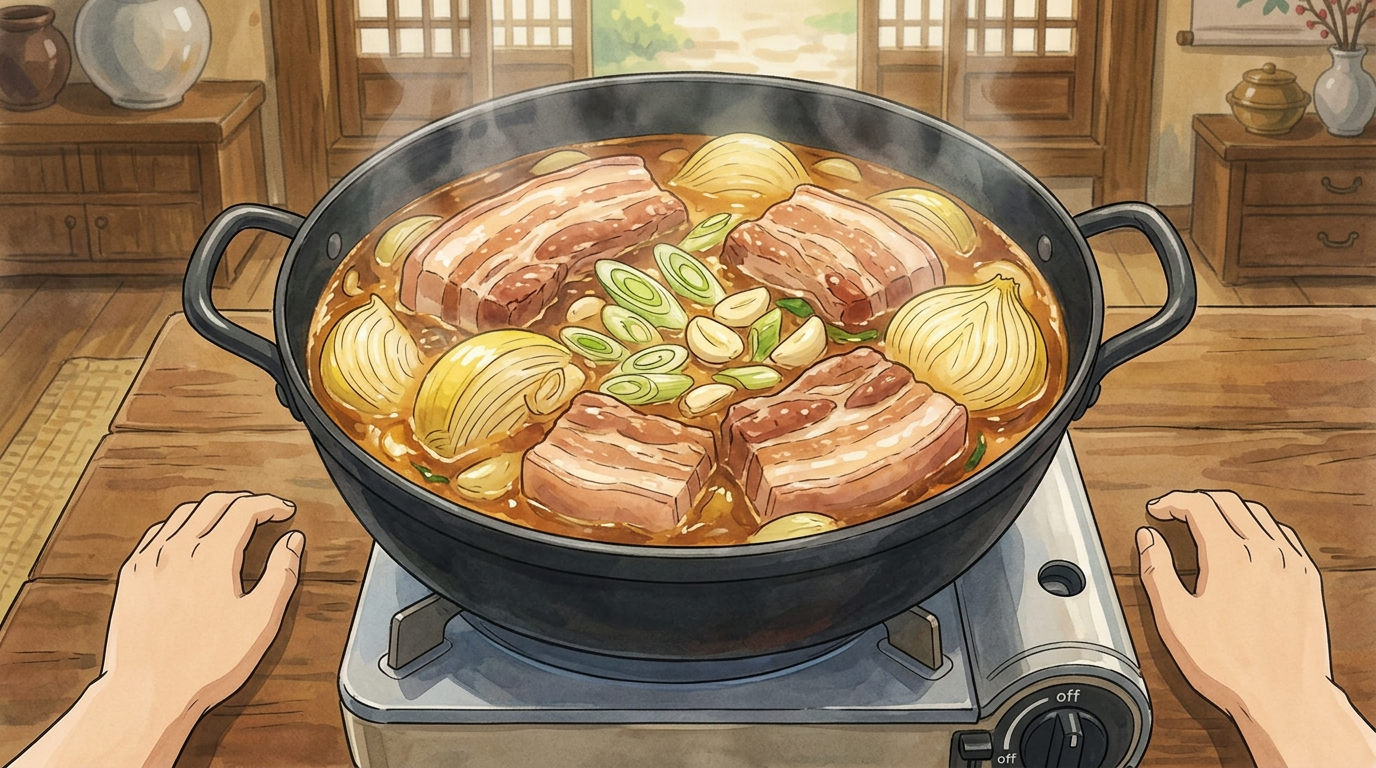
Turn off the heat and let the meat stay in the hot broth until completely cooled to retain juiciness.
-
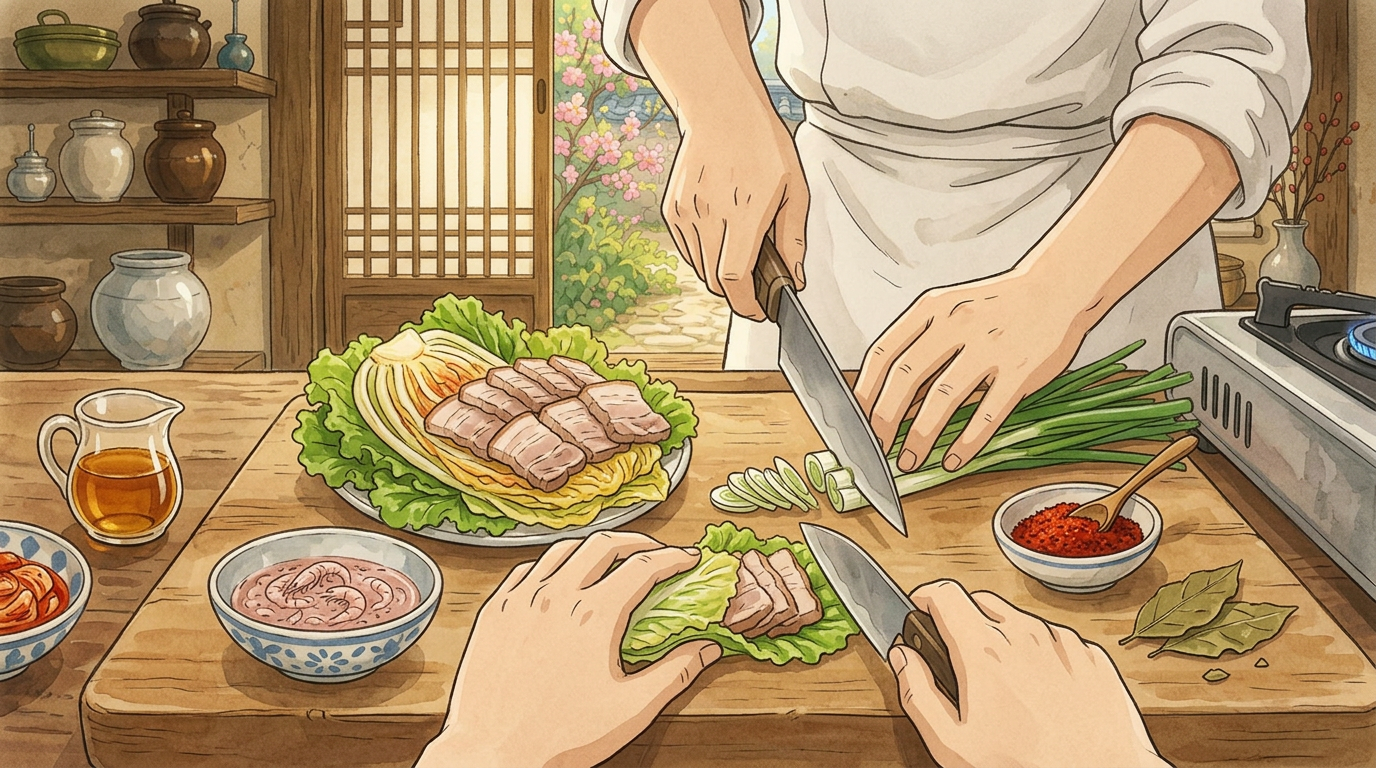
Thinly slice the chilled meat and serve it in prepared cabbage (or lettuce) leaves together with sae-woojeot, gochugaru, sesame oil, sesame seeds, finely chopped scallion and radish to taste.
FAQ
What is Bossam (보쌈)?
Bossam (보쌈) is a traditional Korean dish featuring tender, thinly sliced steamed pork belly, often served with fresh or fermented cabbage wraps, spicy radish salad, and salted shrimp sauce.
How is Bossam typically served and eaten?
Bossam is usually served with various accompaniments like kimchi, ssamjang (dipping sauce), and fresh vegetables. Diners wrap a slice of pork with these ingredients in a lettuce or cabbage leaf to create a 'ssam' (wrap).
Can I substitute pork belly in this Bossam recipe?
While pork belly is traditional for its rich flavor and texture, you can use other cuts like pork shoulder or butt for a leaner alternative, though the cooking time and final texture may vary.
What are the key seasonings for Bossam?
The pork itself is often steamed with aromatics like onion, garlic, ginger, and doenjang. The accompanying sauces, such as sae-ujeot (salted shrimp sauce) and ssamjang, provide the main seasoning for the wraps.
Where can I find authentic Korean ingredients for Bossam in [User's City]?
Look for Korean grocery stores or Asian markets in [User's City]. Key ingredients like doenjang, sae-ujeot, and gochugaru are commonly available there. Our app can also suggest local stores or online alternatives.