Gaji Mari (가지말이)
Korea

Light vegan rolls made from thinly sliced eggplant, filled with fresh vegetables. Served with spicy mustard and soy sauces that give the dish a piquant flavor.
Ingredients
- 2 pcs eggplant
- 2-3 tablespoons oil
- to taste salt
- to taste pepper
- 1 pcs alfalfa sprouts
- 85 g red cabbage
- 0.25 pcs red bell pepper
- 0.25 pcs orange bell pepper
- 0.25 pcs yellow bell pepper
- 0.25 pcs green bell pepper
- 1 pcs enoki mushrooms
- 2 tsp Korean hot mustard
- 3 tablespoons vinegar
- 1 tablespoons rice syrup
- 2 tablespoons pear juice
- 1 tablespoons soy sauce
- 1 tsp sugar
- 1 tablespoons Korean plum extract
Steps
-
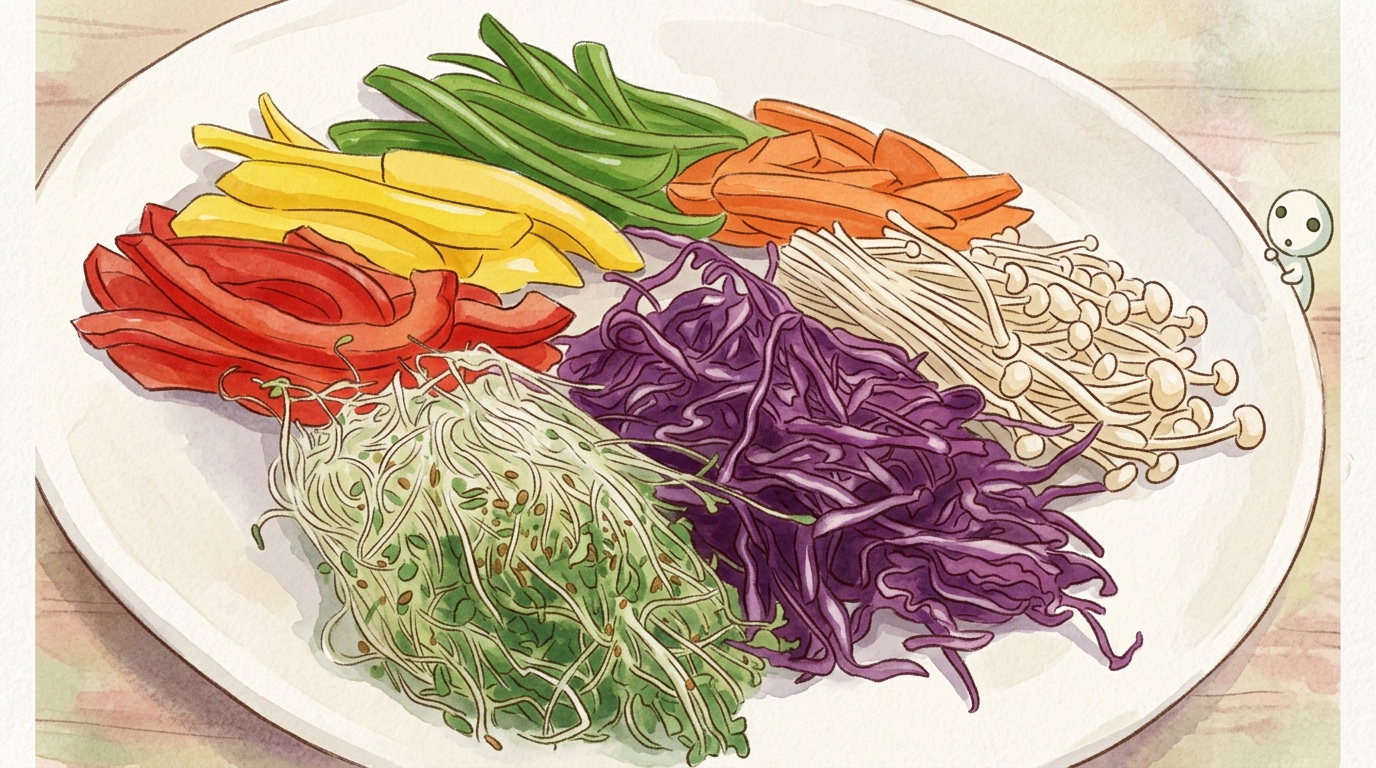
Thinly slice all vegetables for the filling: alfalfa sprouts, red cabbage, bell peppers of different colors and enoki mushrooms.
-

Slice the eggplants lengthwise into thin strips using a vegetable peeler or mandoline.
-
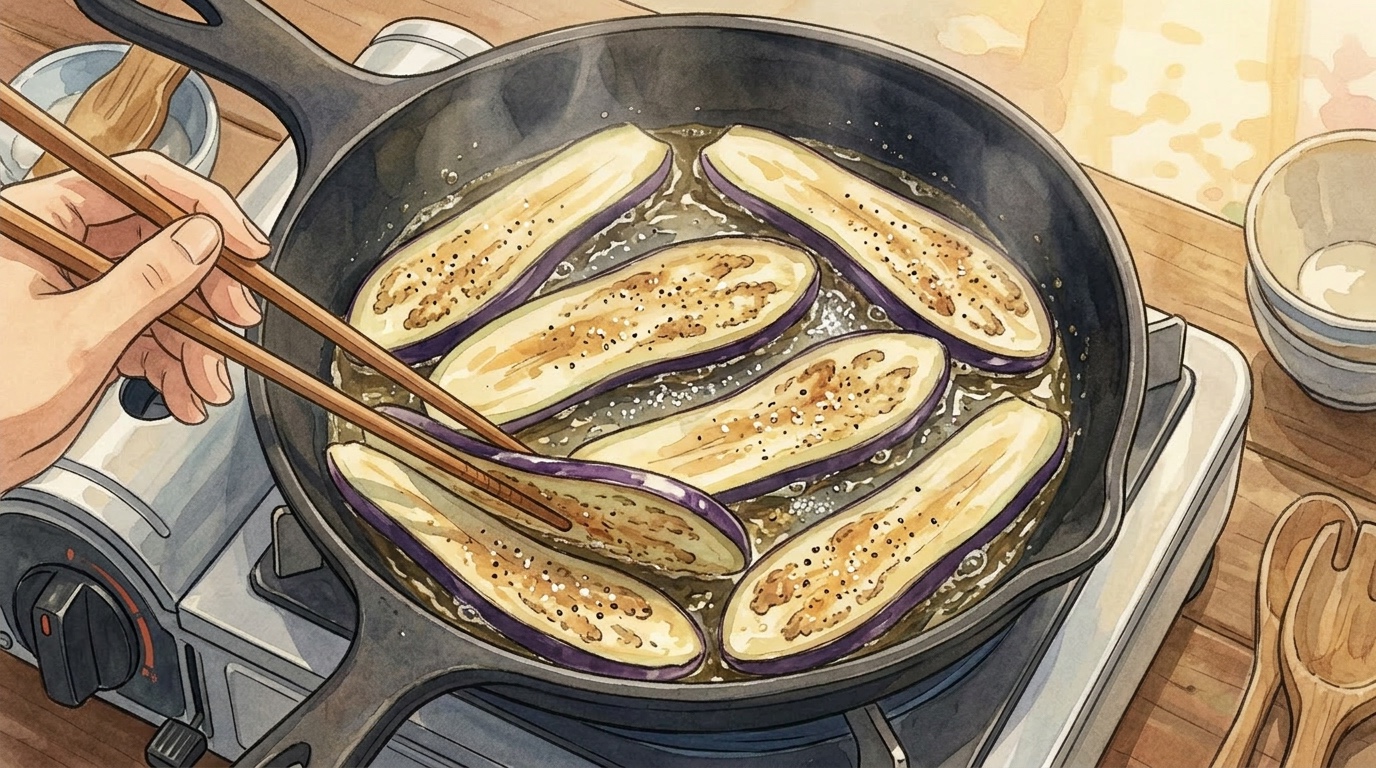
Heat a pan, add oil, place the eggplant slices, lightly salt and pepper, and sauté 1–2 minutes on each side.
-

Place a small amount of the prepared vegetables on each eggplant slice and roll into a roll.
-
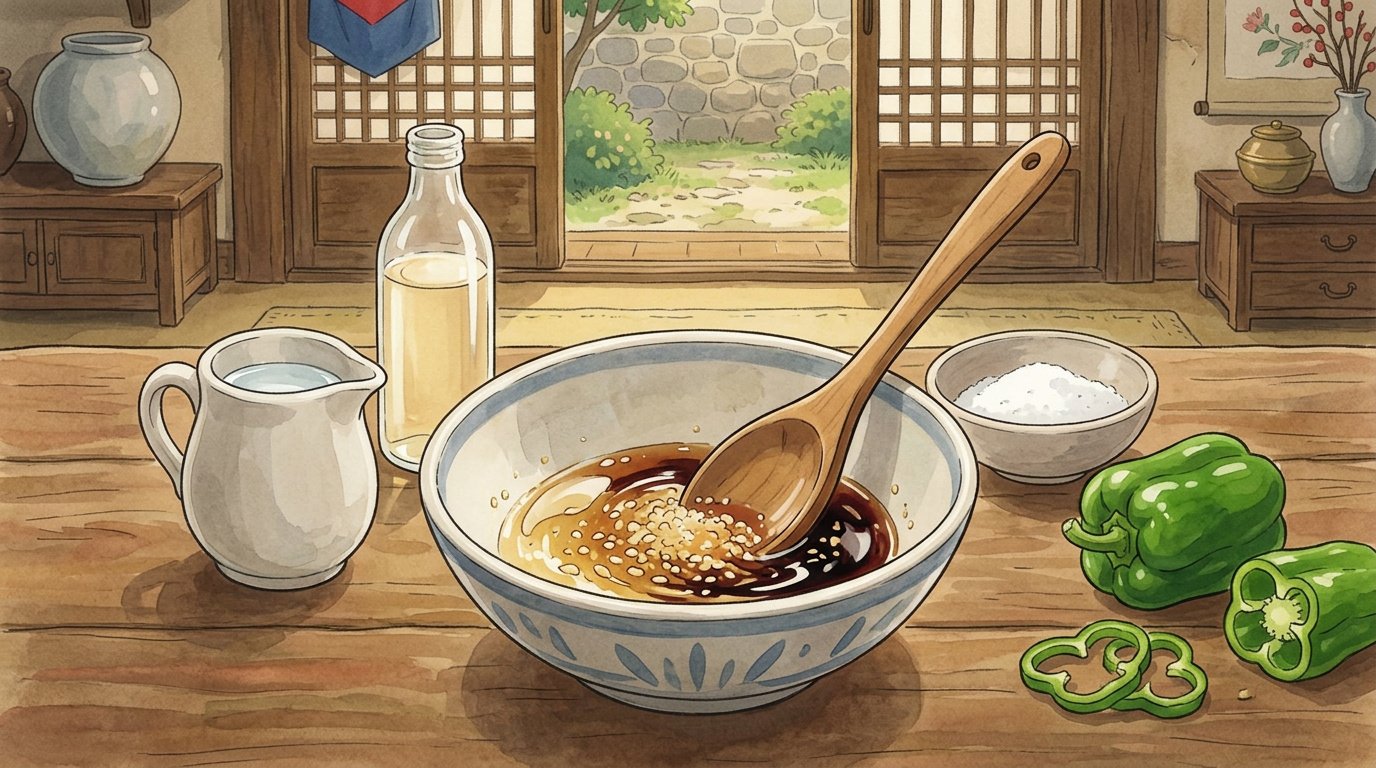
Prepare the spicy mustard sauce: mix Korean hot mustard, vinegar, rice syrup, pear juice and salt.
-
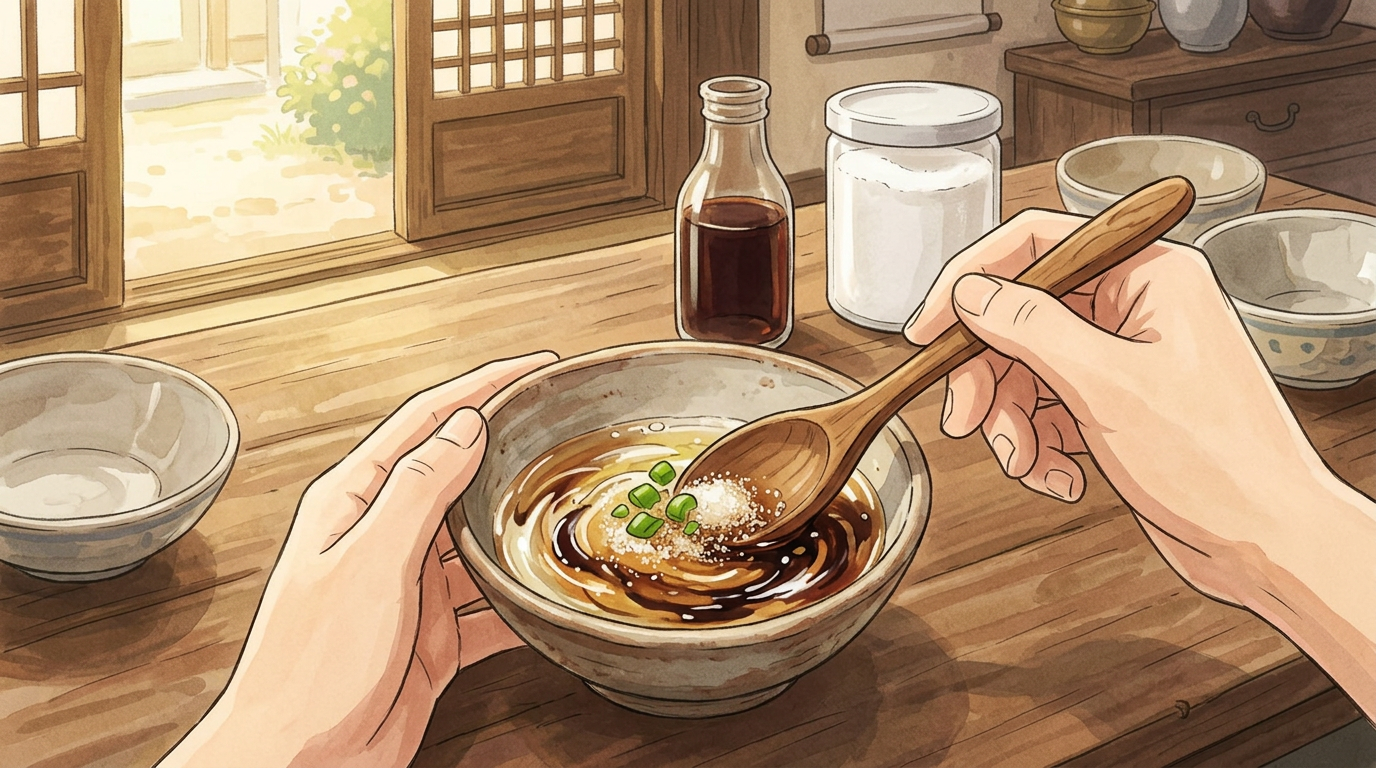
Prepare the soy sauce: mix soy sauce, vinegar, sugar and Korean plum extract.
-
Serve the rolls with the chosen sauces.
FAQ
How do you pronounce 가지말이 (Gaji Mari)?
It's pronounced 'gah-jee mah-ree'. 'Gaji' means eggplant and 'Mari' refers to a roll or wrap.
Can I substitute the eggplant in Gaji Mari?
While eggplant is traditional, you could try thinly sliced zucchini or cucumber for a similar roll, though the texture and flavor will differ. Our app can suggest alternatives!
What is the best way to serve Gaji Mari?
Gaji Mari is best served chilled or at room temperature as a refreshing appetizer or side dish, accompanied by the spicy mustard and soy sauces.
How long does it take to prepare Gaji Mari?
This recipe takes approximately 25 minutes to prepare, making it a quick and elegant dish.
Where can I find Korean hot mustard for this recipe?
Korean hot mustard can typically be found in Asian grocery stores or online. If unavailable, a mix of regular hot mustard powder and a touch of gochujang can be a substitute.