Misoshiru (味噌汁)
Japan
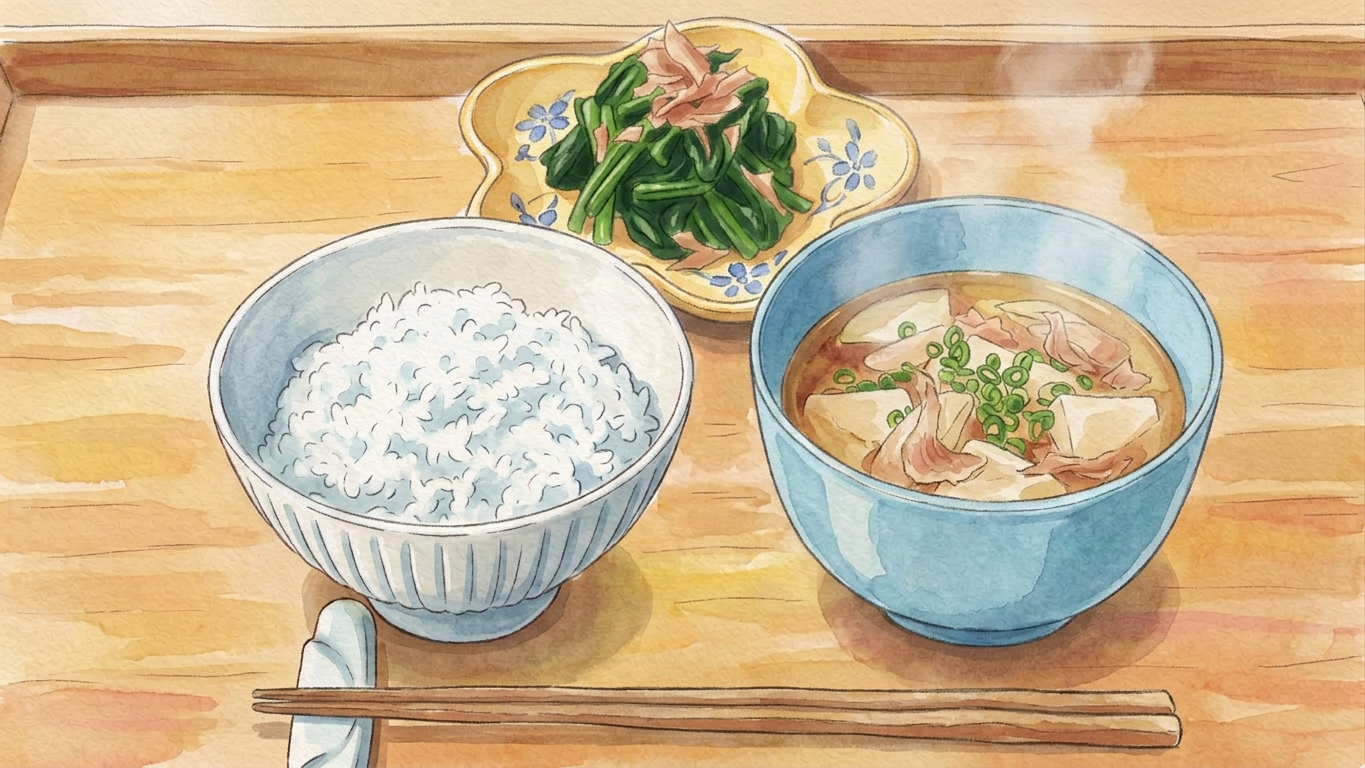
A warm and aromatic Japanese miso soup with potato, onion, and green onion. The broth is made from classic dashi using shaved dried tuna-bonito (katsuobushi) and then enriched with miso paste.
Ingredients
- 12 g katsuobushi
- 900 ml water
- 1 pcs potato
- 0.5 pcs onion
- 2 pcs green onion
- 3.3 tbsp miso paste
Steps
-
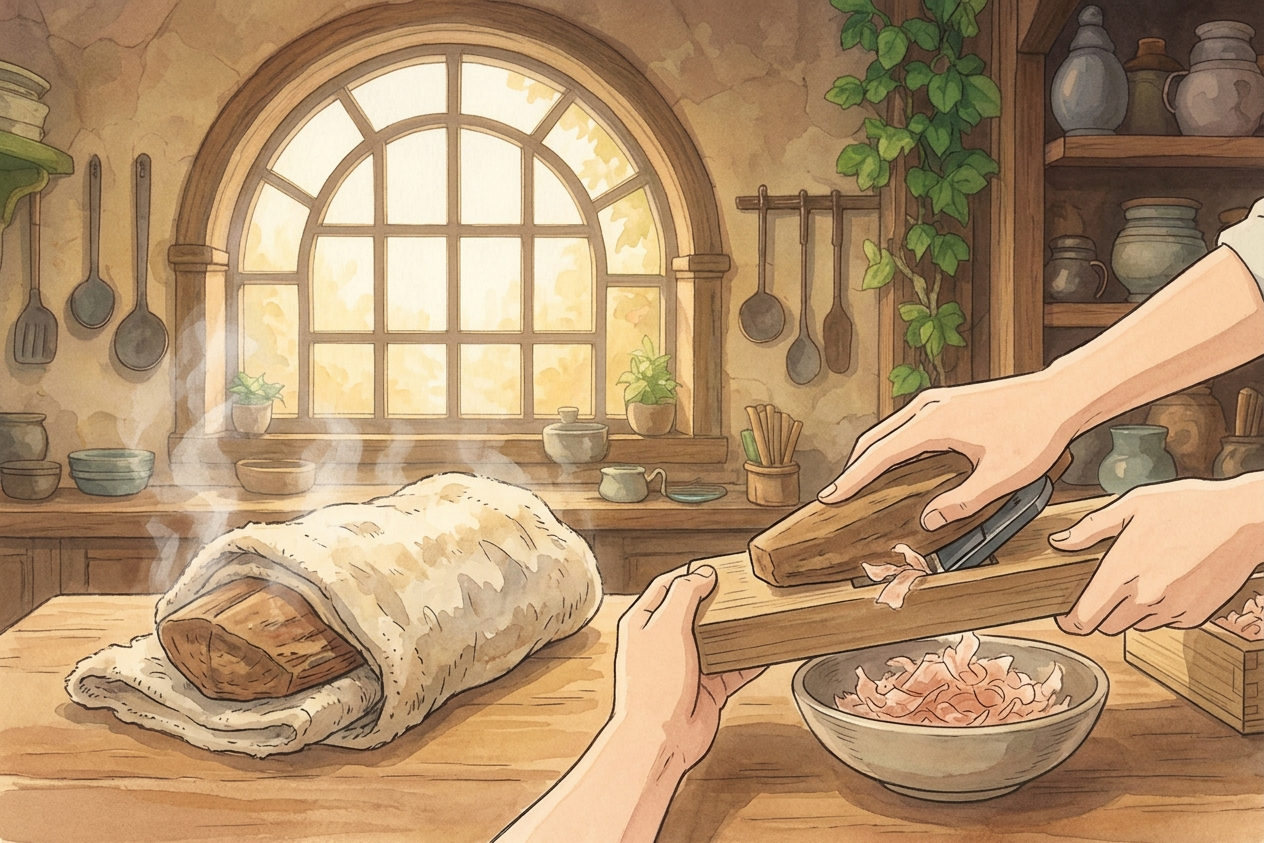
Prepare katsobushi: wrap the whole block in a hot towel, let it rest for 10 minutes, then shave it into thin shavings. You can use ready-made powder.
-
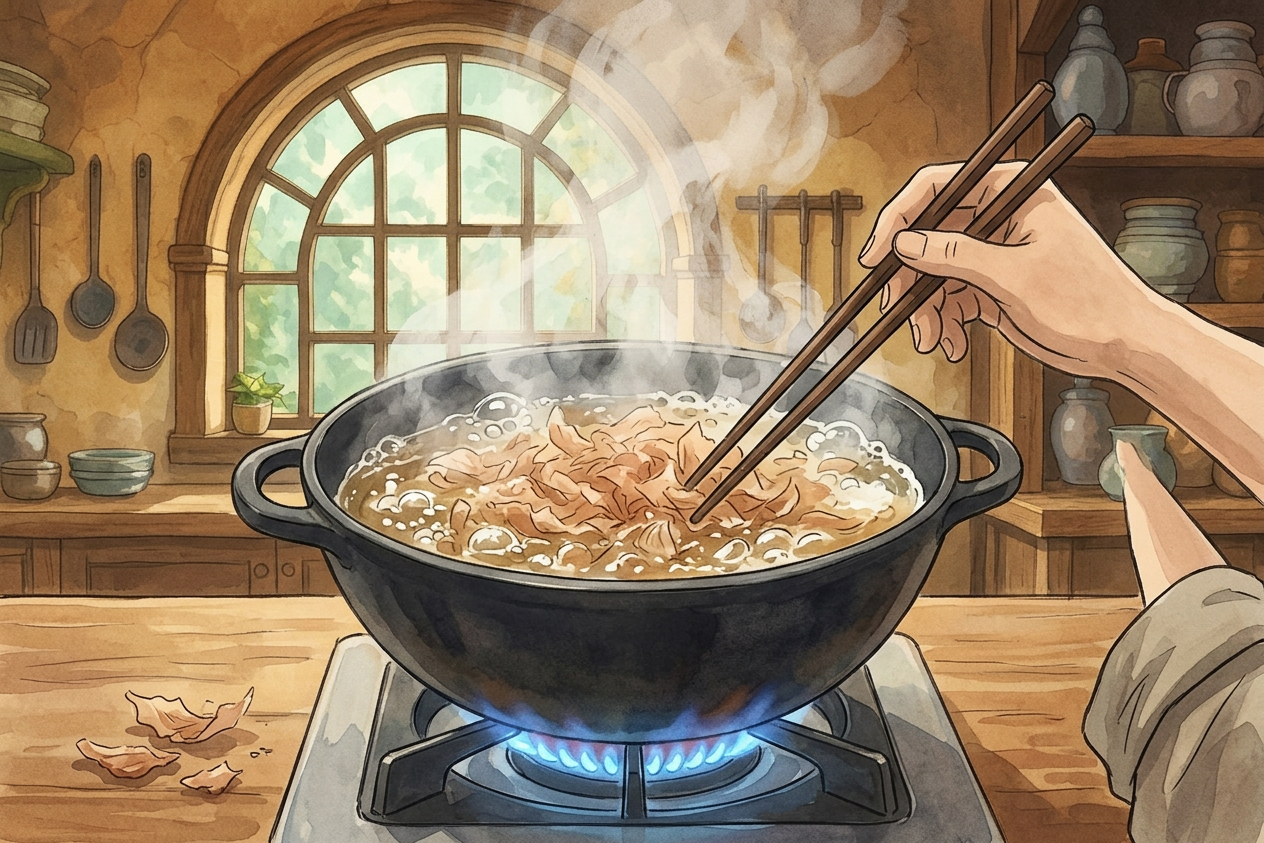
Make the dashi broth: pour water into a pot, bring to a boil, add the katsuobushi shavings, simmer for 1–2 minutes, then strain.
-
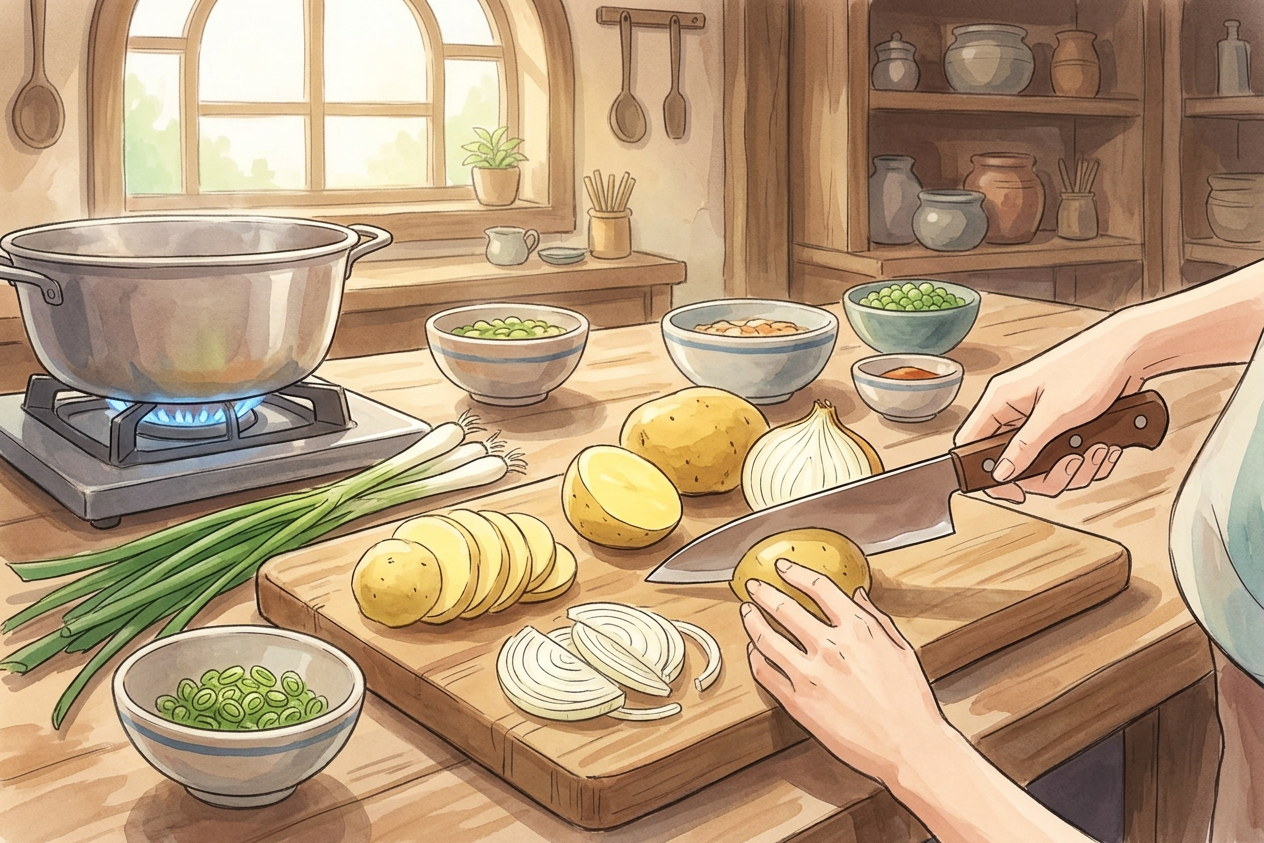
Prepare the vegetables: peel and slice half an onion, peel the potato and slice it, finely chop the green onion.
-
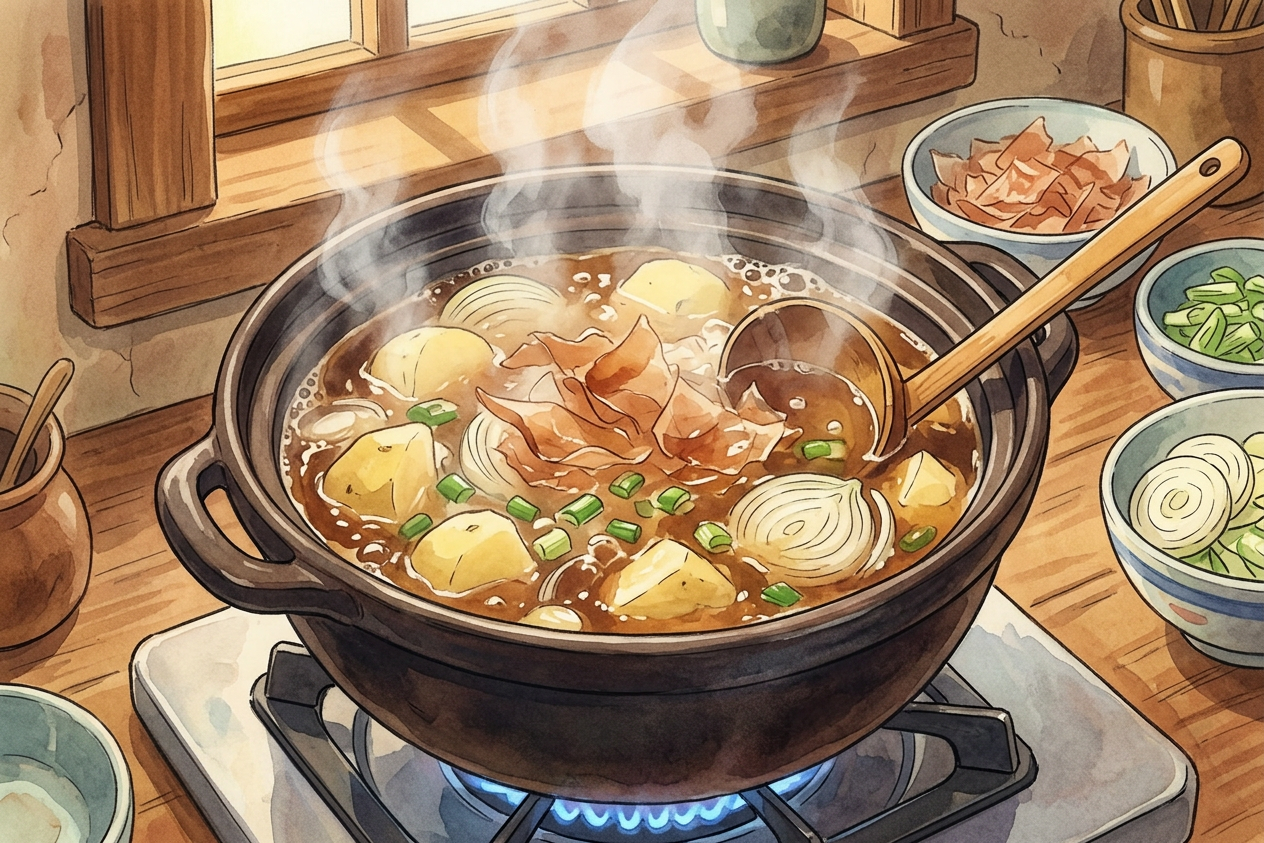
Cook the vegetables in the broth: add the potato and onion slices to the dashi, bring to a boil, then simmer covered for 12 minutes.
-
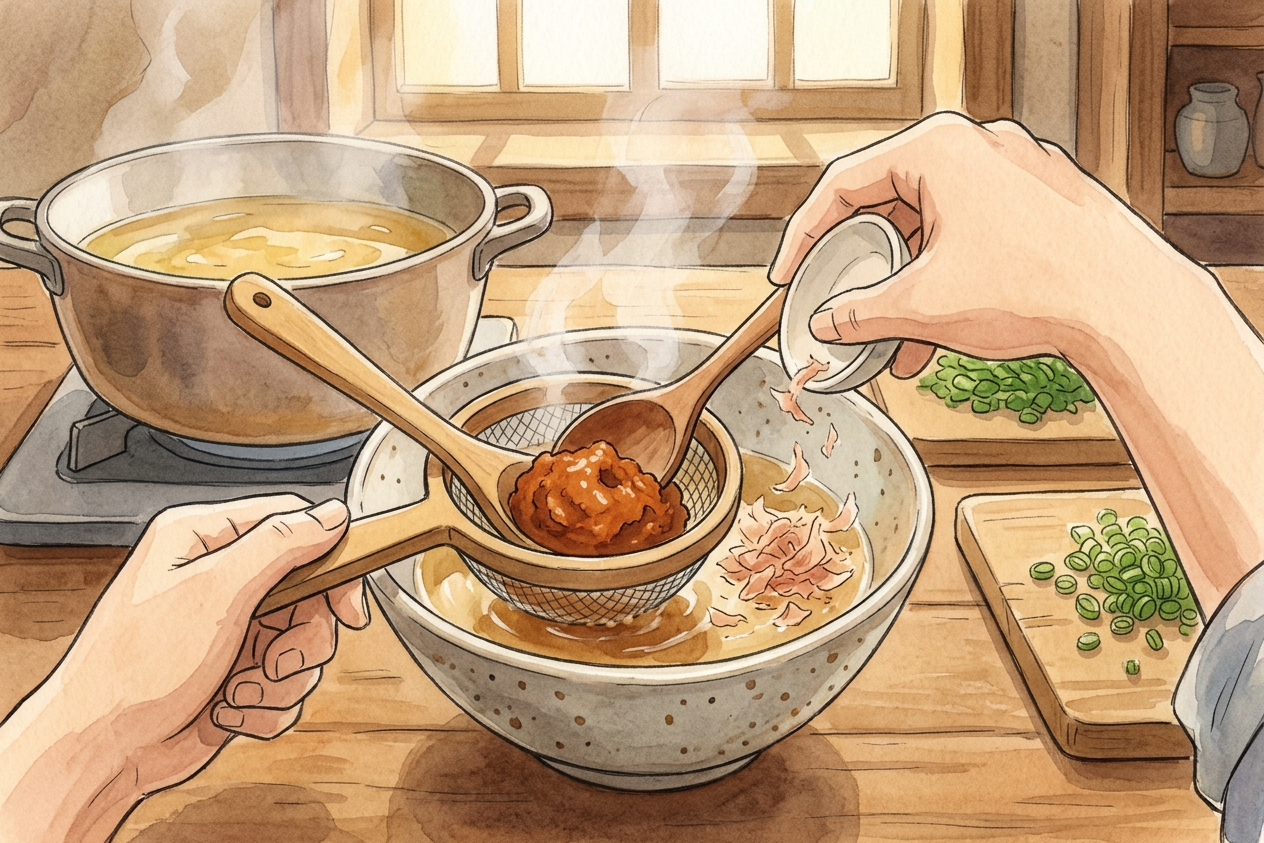
Dissolve the miso: in a small bowl, mix the miso paste with a small amount of hot broth, then pour it into the pot and stir.
-
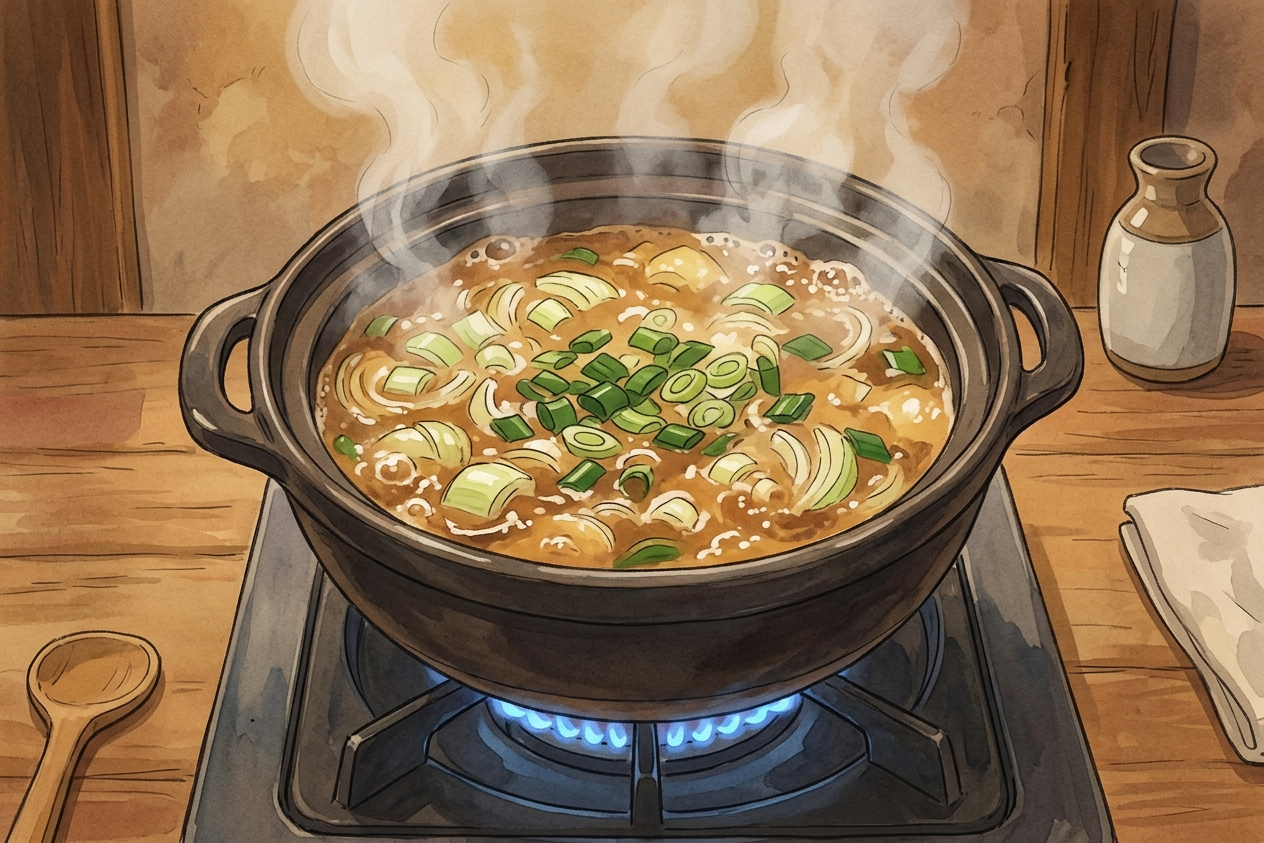
Bring the soup to a boil, turn off the heat, ladle into bowls, add the vegetables and sprinkle with the chopped green onion.
FAQ
How to make Misoshiru like in anime?
Our recipe uses traditional dashi from katsuobushi and authentic miso paste, just like the comforting bowls often seen in Studio Ghibli films, ensuring a genuine taste experience.
Can I make this Misoshiru without dashi?
While dashi is crucial for authentic flavor, you can use a vegetarian dashi powder or kombu dashi as a substitute, though the taste profile will differ slightly from the katsuobushi-based version.
What are the key ingredients for authentic Misoshiru?
For this recipe, the key ingredients are katsuobushi for dashi, miso paste, potato, onion, and green onion. The quality of miso and dashi is paramount.
How long does Misoshiru last in the fridge?
Misoshiru is best enjoyed fresh. If stored in an airtight container in the refrigerator, it can last for up to 2-3 days, but reheating should be gentle to preserve flavor.
What can I substitute for katsuobushi in this Misoshiru recipe?
For a similar umami depth, you can use dashi powder or a combination of kombu (dried kelp) and shiitake mushrooms to create a vegetarian dashi base.