Satsuma-age (薩摩揚げ)
Japan
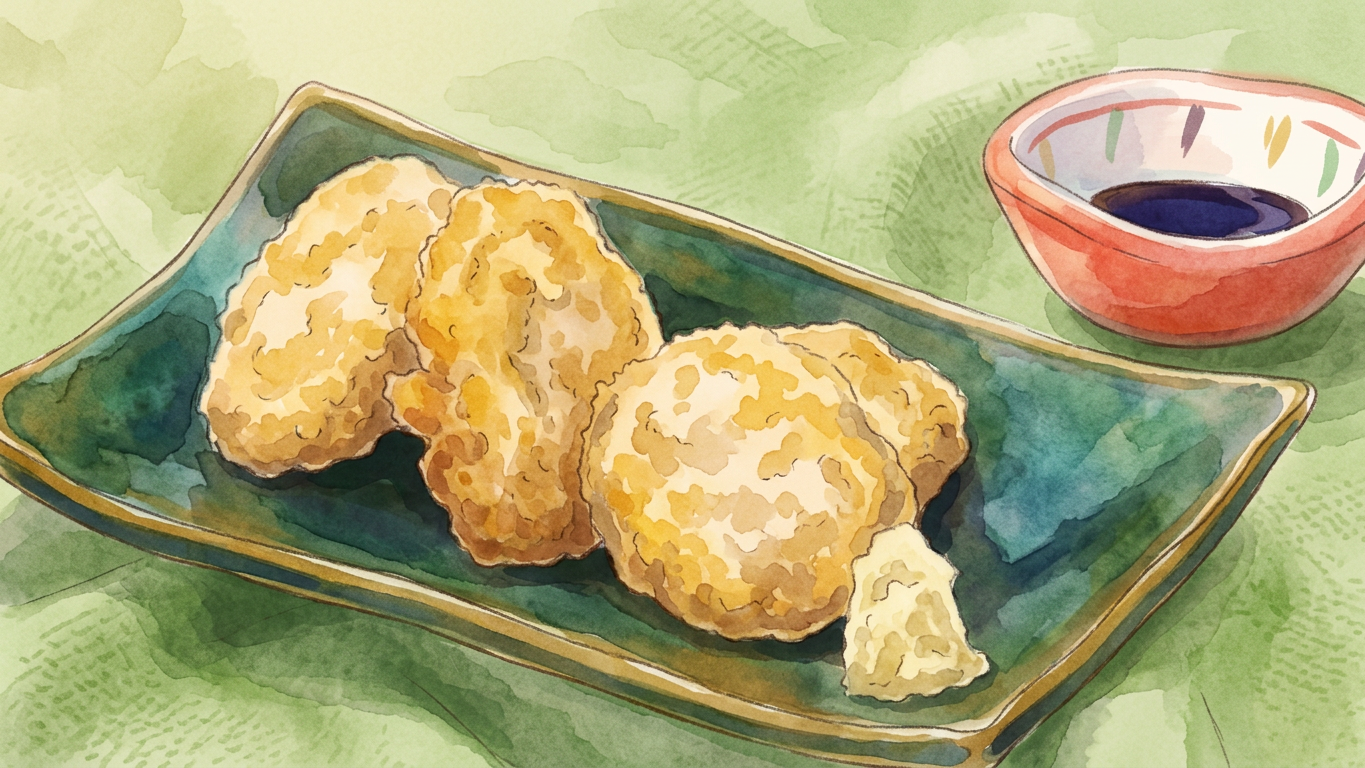
Traditional Japanese fish balls made from white fish paste, fried to a golden crust and served with soy sauce and fresh grated ginger. Served as an appetizer or side dish.
Ingredients
- 200 g white fish
- 1 g salt
- 1 tbsp potato starch
- 1 pcs ginger
- to taste soy sauce
- to taste vegetable oil
Steps
-
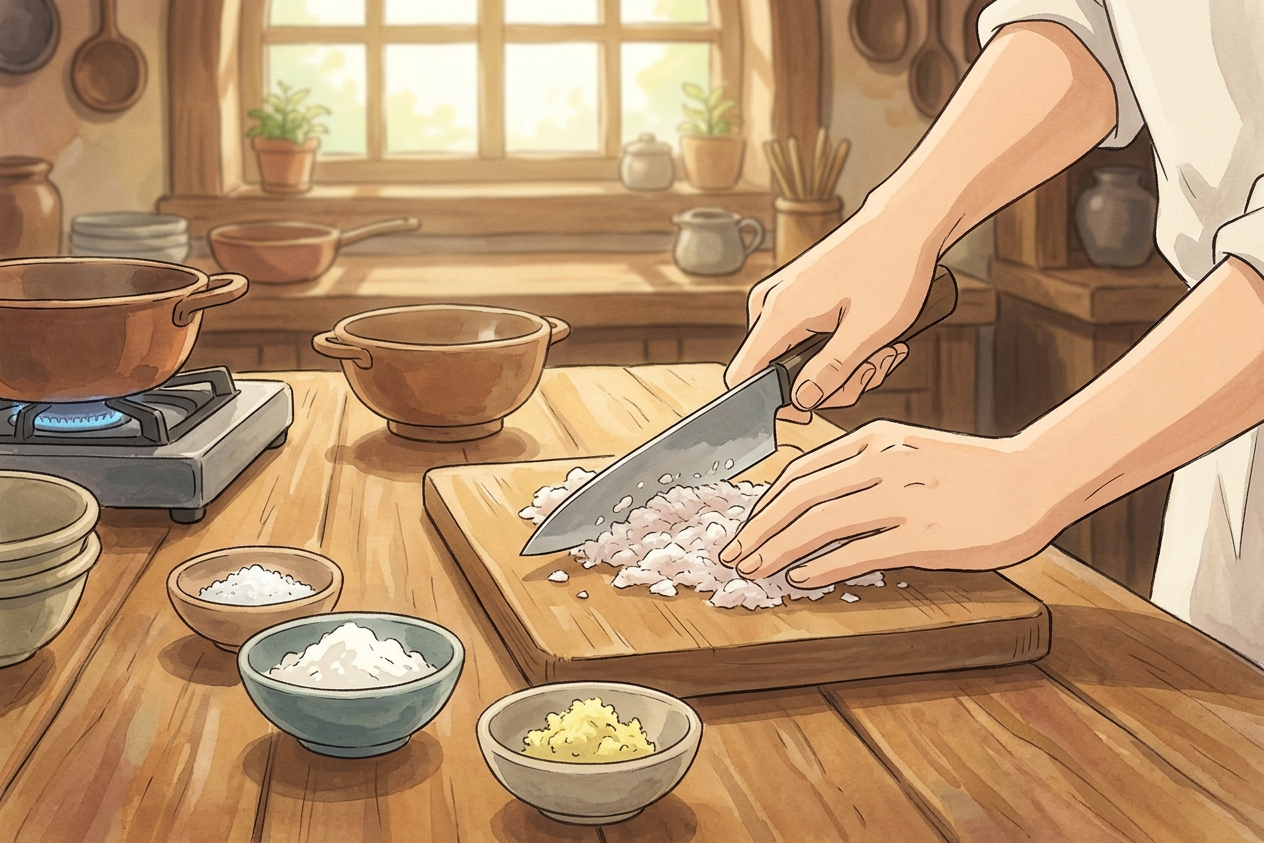
Remove the skin and bones from the fish, finely chop, then mash it with a flat knife into a homogeneous paste.
-
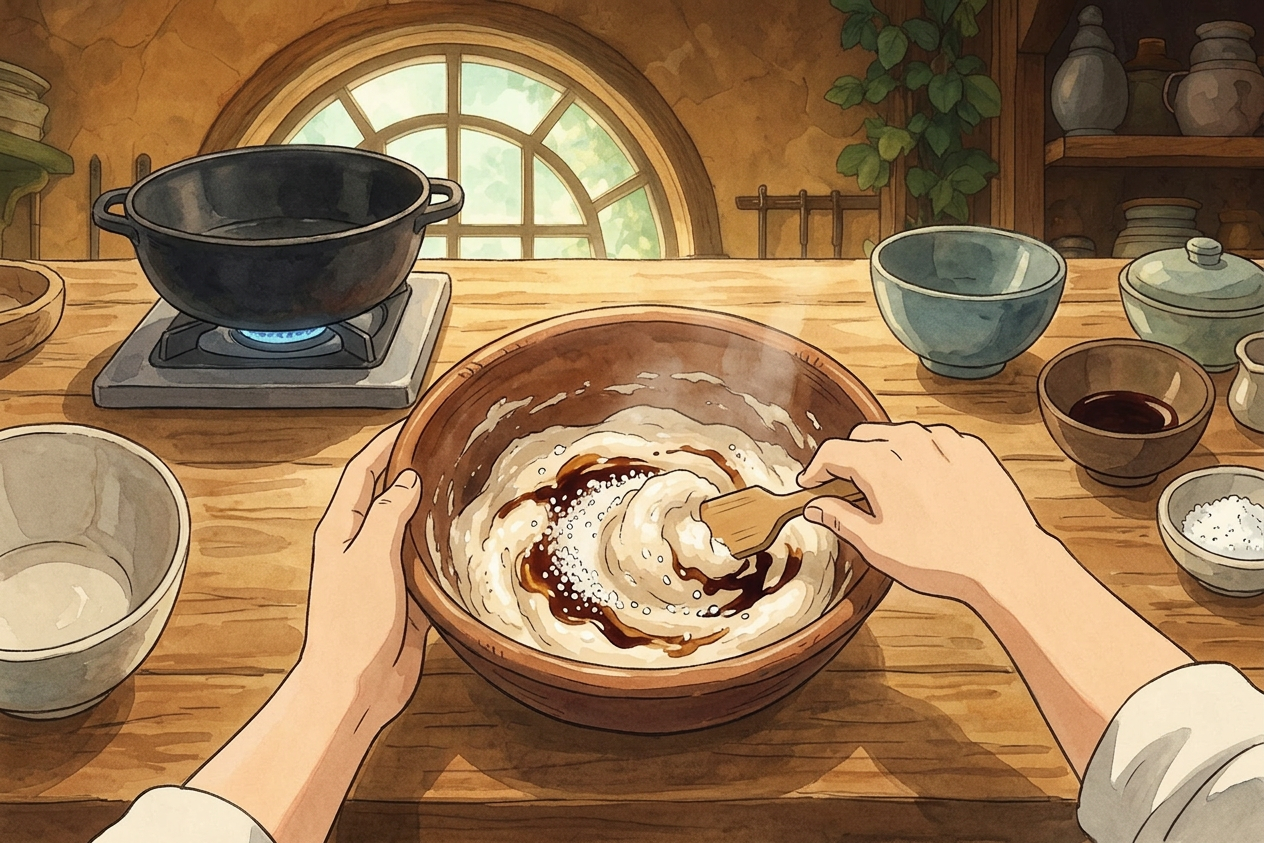
Transfer the fish paste to a bowl, add salt and mix thoroughly with a spatula until elastic.
-

Stir in the potato starch, mix until uniform, divide the mixture into 8 portions and shape small oval patties about 8 mm thick.
-
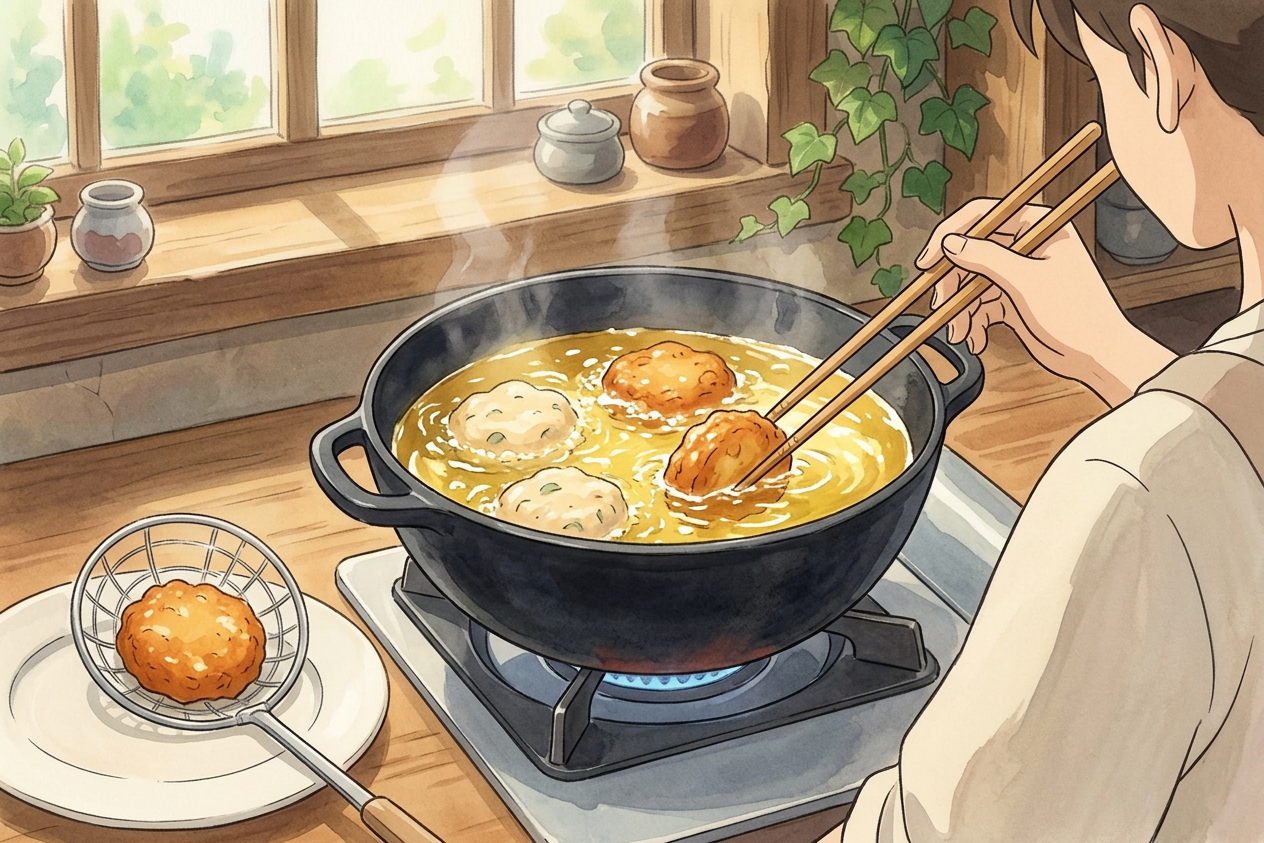
Heat vegetable oil in a deep pan to 160 °C and fry the patties for about 4 minutes until golden‑brown, then remove and let excess oil drain.
-
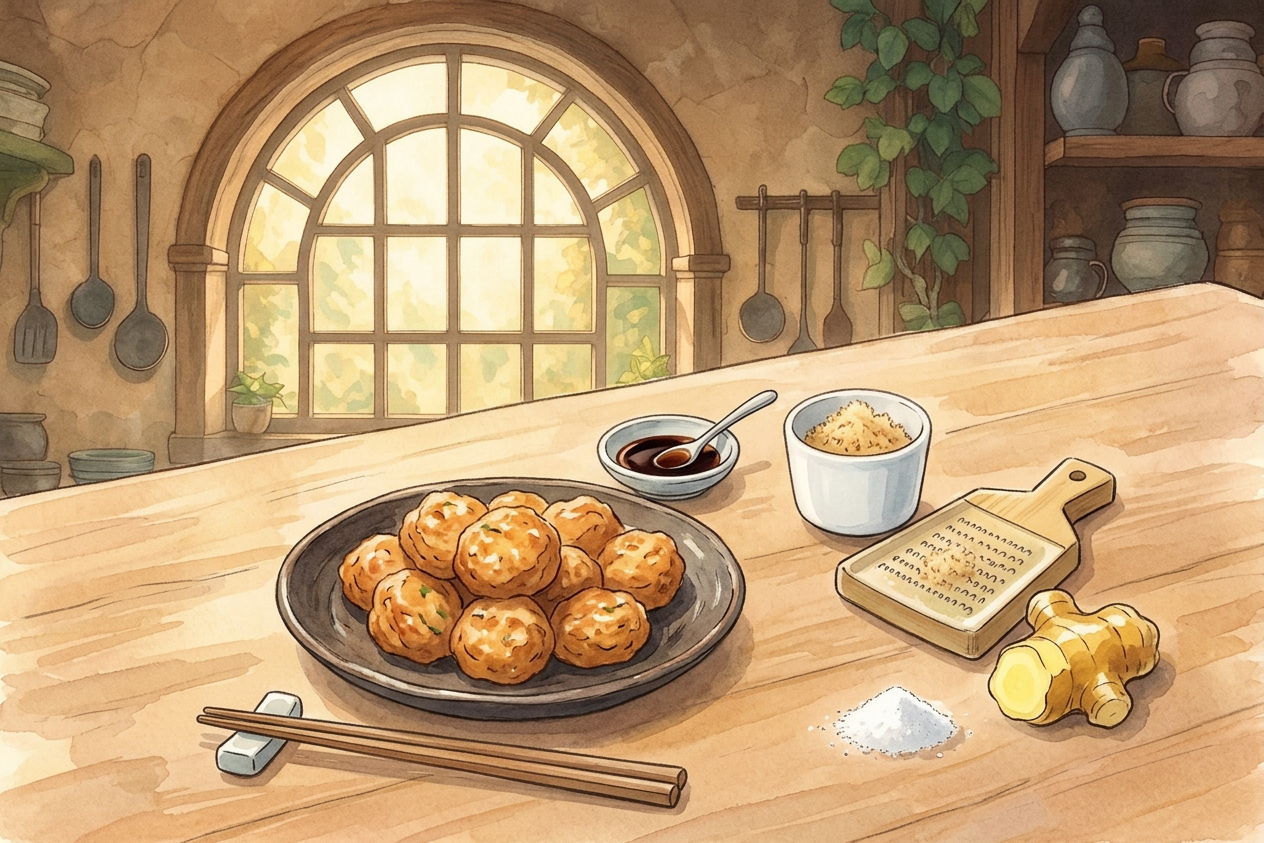
Peel the ginger, grate it finely and serve the fish balls with a small amount of soy sauce and grated ginger.
FAQ
What is Satsuma-age (さつま揚げ)?
Satsuma-age (さつま揚げ) are traditional Japanese fried fish cakes made from a paste of white fish, typically seasoned and then deep-fried until golden brown. They are a popular snack, side dish, or ingredient in various Japanese dishes.
How long does it take to make Satsuma-age?
This Satsuma-age recipe takes approximately 31 minutes to prepare and cook, making it a relatively quick and rewarding dish.
What can I serve with Satsuma-age?
Satsuma-age is traditionally served with soy sauce and fresh grated ginger. It also makes a great appetizer, side dish, or addition to noodle soups and stews.
Can I substitute ingredients in Satsuma-age?
Yes, Umami Guru's AI assistant can help you find suitable substitutions for ingredients like different types of white fish or starches, ensuring you can still enjoy this traditional Japanese dish.
Is Satsuma-age featured in anime or Ghibli films?
While specific appearances can vary, dishes similar to Satsuma-age, or the general aesthetic of Japanese home cooking it represents, are often seen in Ghibli films and other anime, evoking a sense of comfort and tradition.